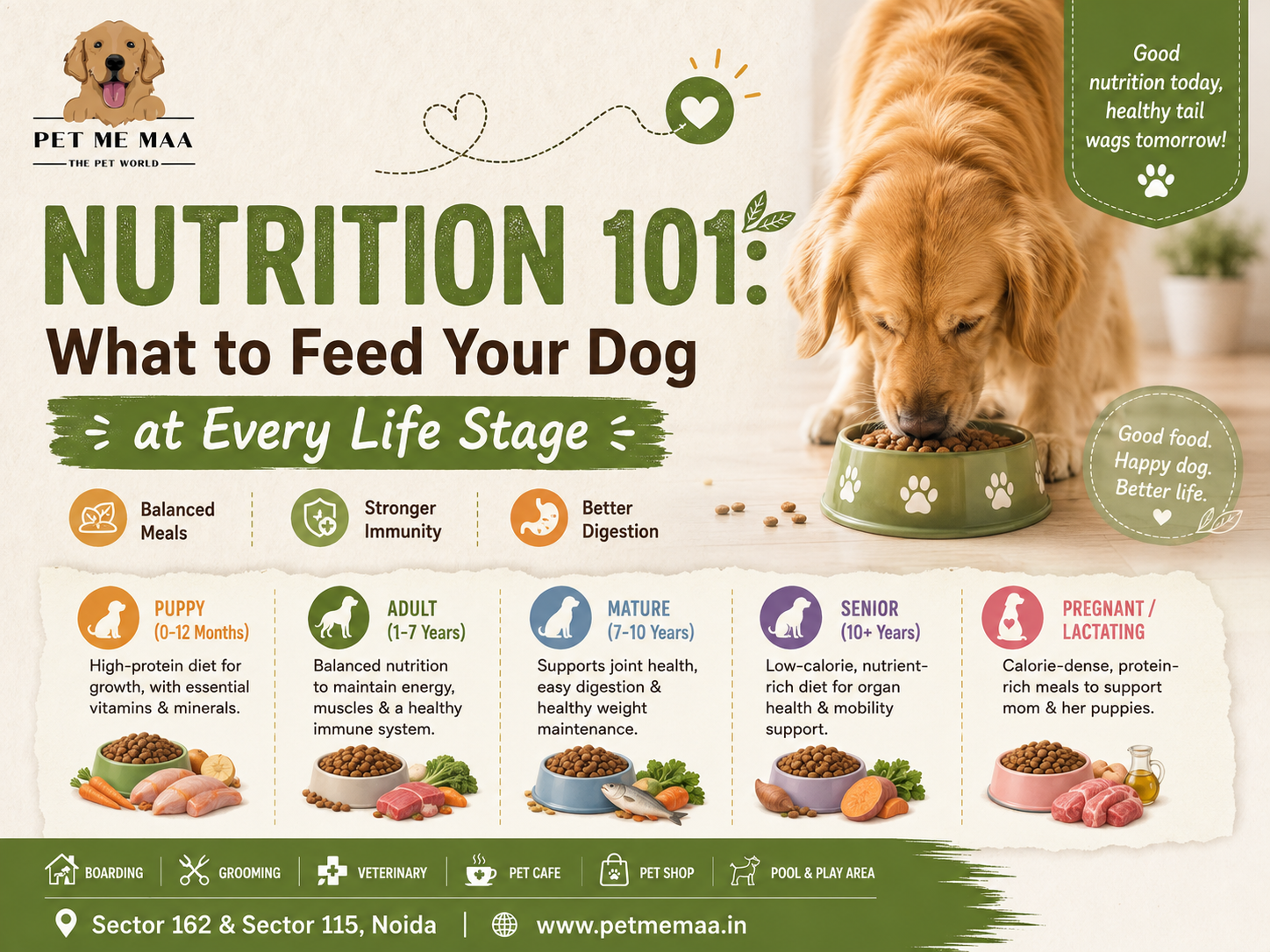
Feeding your dog isn't a one-size-fits-all routine. A growing puppy, an active adult, and a slowing senior all have very different nutritional needs — and getting it right at each stage plays a huge role in long-term health, energy, and even behavior.
Puppy Stage (0–12 Months)
Puppies grow fast and need food that supports bone, muscle, and brain development. Look for a diet specifically labeled for puppies, with higher protein and fat content than adult formulas.
- Feed 3–4 small meals a day up to around 6 months, then reduce to 2 meals
- Choose a puppy-specific formula appropriate for their expected adult size (small, medium, or large breed)
- Avoid overfeeding — rapid growth in large breeds can strain developing joints
- Always keep fresh water available alongside meals
Adult Stage (1–7 Years, Varies by Breed)
Once growth has leveled off, the focus shifts to maintaining a healthy weight and supporting daily activity levels.
- Feed 2 meals a day on a consistent schedule
- Match calorie intake to activity level — a highly active dog needs more than a mostly indoor one
- Include a good balance of protein, healthy fats, and fiber for digestion
- Monitor weight regularly and adjust portions if you notice gain or loss
Senior Stage (7+ Years, Varies by Breed)
As dogs age, metabolism slows and joint health becomes a bigger priority. Senior dogs often need fewer calories but more targeted nutrients.
- Switch to a senior-formulated diet, often lower in calories but higher in fiber
- Look for added joint support like glucosamine and chondroitin
- Keep protein quality high to help maintain muscle mass
- Watch for changes in appetite or weight, which can signal underlying health issues
General Feeding Tips for Every Stage
- Always transition to a new food gradually over 5–7 days to avoid stomach upset
- Avoid feeding table scraps regularly, even in small amounts
- Treats should make up no more than 10% of daily calorie intake
- When in doubt about portions or ingredients, check with your vet — breed, size, and health conditions all affect the "right" diet
Why Nutrition and Training Go Hand in Hand
A well-fed dog with stable energy levels is often easier to train and manage. Sudden hunger, low blood sugar, or poor nutrition can contribute to restlessness, irritability, or lack of focus during training sessions.