
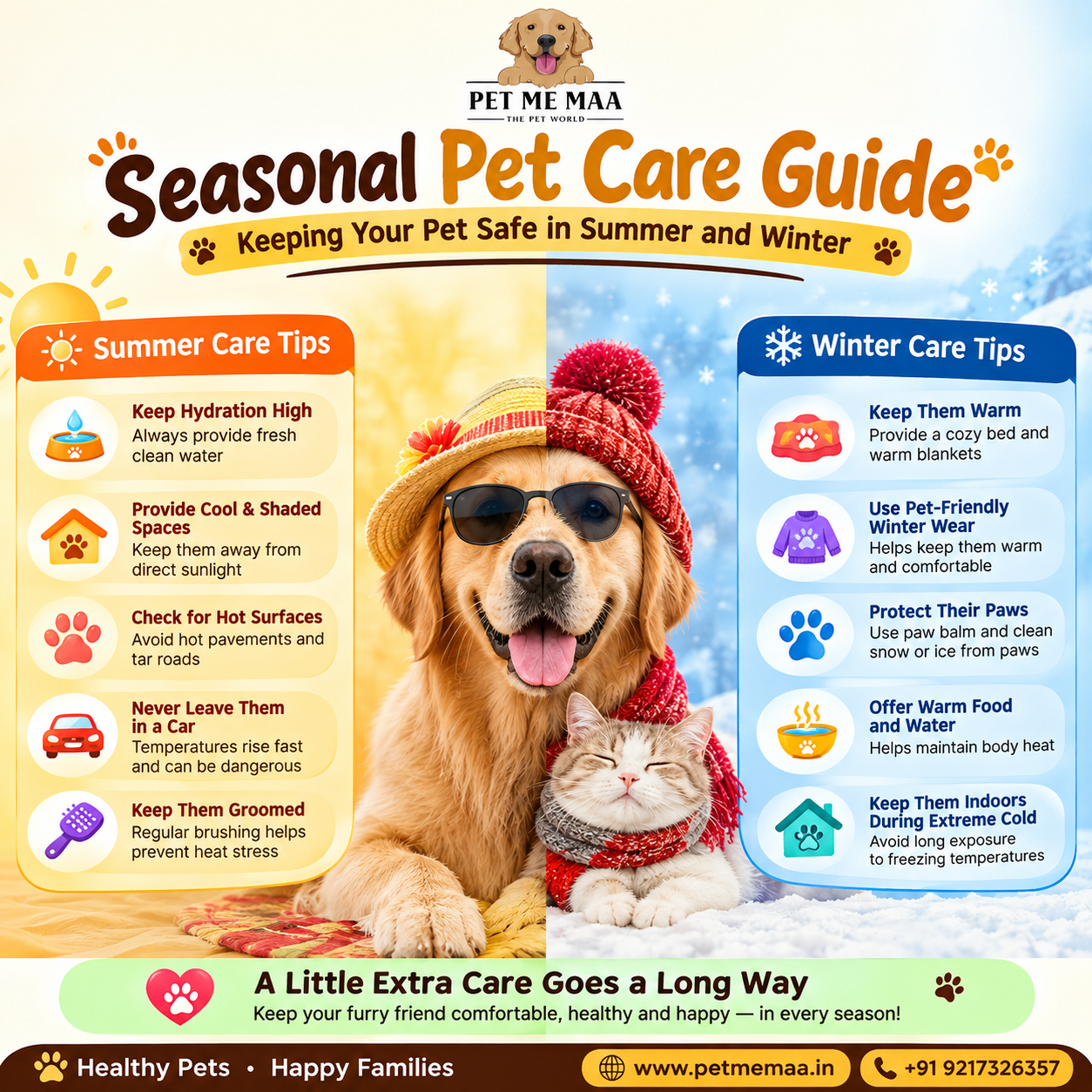
Pets can't regulate temperature the way humans do, which makes them far more vulnerable to seasonal extremes. A few adjustments to routine and awareness of warning signs can prevent serious health issues throughout the year.
Summer Pet Care
Watch for heatstroke
Excessive panting, drooling, weakness, or collapse are red flags. Move your pet to a cool area and contact a vet immediately if you notice these signs.
Avoid hot pavement
Asphalt can burn paw pads quickly. A simple rule: if it's too hot for your bare hand for five seconds, it's too hot for their paws. Walk early morning or evening instead.
Never leave pets in parked vehicles
Even a few minutes in a closed car can cause temperatures to rise dangerously fast.
Keep hydration constant
Place multiple water bowls around the house and refresh them often, especially outdoors.
Watch for parasites
Warmer months mean more fleas, ticks, and mosquitoes. Keep preventive treatments up to date.
Winter Pet Care
Limit outdoor exposure
Short-haired or smaller breeds especially may need a sweater or coat during walks in cold weather.
Protect paws from salt and ice
De-icing chemicals on roads and sidewalks can irritate paw pads. Wipe paws down after walks.
Watch for signs of hypothermia
Shivering, lethargy, and weakness in cold conditions need immediate attention.
Adjust food if needed
Some pets naturally require slightly more calories in winter if they're more active outdoors, while less active indoor pets may need less.
Create a warm resting space
A raised bed away from cold floors or drafts helps pets stay comfortable indoors.
Year-Round Tips
Keep an eye on your pet's coat condition, adjust grooming frequency by season, and always have fresh water available regardless of temperature.